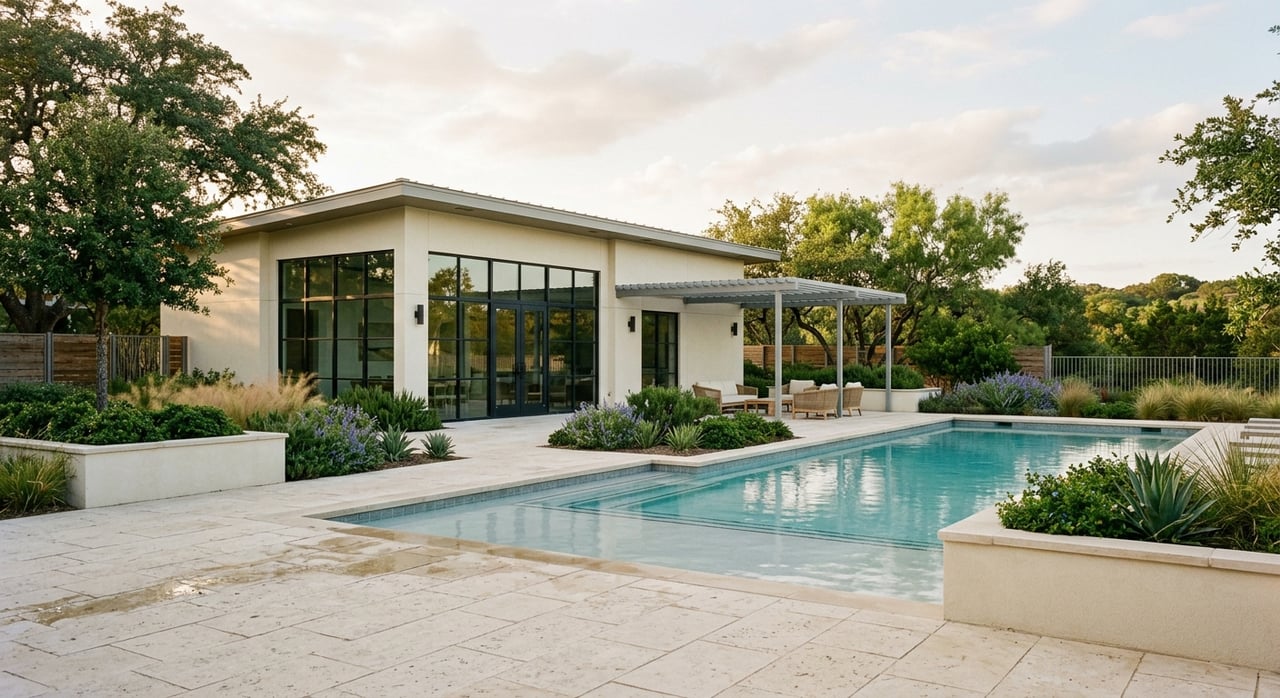
If you are looking at homes in Bee Cave, one of the biggest surprises can be how different HOA living feels from one neighborhood to the next. Some communities center daily life around pools, trails, and club spaces, while others have lighter rules or no HOA at all. If you want to compare your options clearly before you buy, this guide will help you understand what HOA amenities and expectations often mean in Bee Cave. Let’s dive in.
Bee Cave HOAs Are Neighborhood Specific
Bee Cave does not have one citywide homeowners association. Instead, HOA rules, fees, and amenities are usually tied to the specific subdivision where a home is located.
That matters because two homes with similar price points can come with very different ownership terms. The City of Bee Cave neighborhood directory lists multiple subdivisions with HOA contacts, and it also identifies Bee Cave West as a no-HOA neighborhood.
Another important detail is jurisdiction. Some neighborhoods are inside Bee Cave city limits, while others are outside city limits in the ETJ, which stands for extraterritorial jurisdiction.
If a property is inside Bee Cave city limits, it is subject to all city ordinances. If it is in the ETJ, it is subject to a narrower set of public regulations, so it is smart to confirm both the neighborhood and the jurisdiction when you compare homes.
City Rules Still Matter
Even in an HOA community, private rules are only part of the picture. Bee Cave also has city regulations that can affect what you do with your property.
The city approved its first Unified Development Code in 2022. That code covers topics such as landscaping and screening, signage, zoning, and site development.
Bee Cave has also adopted dark-sky lighting regulations for residential and commercial development. On top of that, the city requires permits before tree removal or trimming, and pruning outside July through January can lead to fines.
For buyers, this means an HOA may not be the only layer of approval to think about. If you plan to make exterior changes, update lighting, or do work around mature trees, it is important to review both the HOA rules and any city requirements.
Common HOA Amenities in Bee Cave
In and around Bee Cave, amenity-rich communities often focus on outdoor living and shared recreation. Pools, clubhouses, trails, parks, and open space are common features in larger master-planned neighborhoods.
These amenities can shape your day-to-day lifestyle as much as the home itself. For some buyers, they add convenience and community connection. For others, they add cost and structure that may or may not fit the way they want to live.
Sweetwater Amenities
Sweetwater is a 1,400-acre master-planned community with more than 700 acres devoted to parks, trails, open space, and community centers. Its amenity package is a good example of the resort-style features some Bee Cave area buyers are looking for.
The Sweetwater Club includes three pools in one, a clubhouse, pavilion, fitness center, and sports fields. The Overlook Club adds two more pools, a clubhouse, and Hill Country views.
Sweetwater also states that its HOA management company provides a lifestyle coordinator for community events. If you want a neighborhood with planned activities and shared gathering spaces, this kind of setup may appeal to you.
Spanish Oaks Amenities
Spanish Oaks offers a different type of amenity package. The community is described as a private Hill Country community with 24/7 staffed gatehouses, a pool pavilion, Fish Camp, trails and parks, and a private golf club.
Its amenities are positioned around privacy, outdoor access, and appreciation of the natural landscape. If your priority is a more private, gated, club-oriented setting, this may feel very different from a larger social master-planned community.
What HOA Expectations Usually Include
When people talk about HOA expectations, they often mean more than just paying dues. In Texas, the governing documents usually define the day-to-day rules and procedures that owners are expected to follow.
According to the Texas State Law Library, HOA governing documents can cover restrictions, fines, meetings, and procedures. Chapter 209 of the Texas Property Code addresses records, dues, meetings, and voting rights.
In practical terms, that often means you should expect details about things like:
- Regular assessments or dues
- Rules for exterior changes
- Board meeting procedures
- Access to association records
- Fine or enforcement processes
The exact terms depend on the neighborhood, not the city as a whole. That is why reading the governing documents is one of the most important parts of HOA due diligence.
Documents Buyers Should Request
Texas law gives buyers and owners useful access to HOA information. Texas Property Code Section 207.003 entitles owners to copies of governing documents and a resale certificate on request.
The resale certificate includes the amount and frequency of regular assessments and may also list HOA lawsuits. Chapter 209 also requires board meeting records to be kept and made available on request.
Before you move forward on a Bee Cave home with an HOA, make sure you understand the paper trail. Key items to review often include:
- Governing documents
- The resale certificate
- Current assessment amounts
- Transfer-related fees
- Available meeting records
These documents can help you compare not just costs, but also how the association operates.
HOA Fees Can Vary More Than You Think
One of the most important lessons for Bee Cave buyers is that dues and fees are not one-size-fits-all. Even within the same master-planned community, the cost structure can change from one section to another.
Sweetwater’s FAQ lists 2024 quarterly HOA dues of $260 per household for most neighborhoods and $390 for Davenport Summit and The Summit at Sweetwater. That is a meaningful difference, especially if you are budgeting across several homes.
Another example comes from the recorded management certificate for Spillman Ranch Community, which the certificate identifies as Falconhead. It lists a $400 working capital assessment, a $175 HOA transfer fee, and a $250 resale certificate fee.
Those numbers show why it helps to ask detailed, property-specific questions instead of assuming one neighborhood works like another. Monthly payment comfort is only part of the picture.
Questions To Ask Before You Buy
When you compare Bee Cave neighborhoods, broad descriptions are helpful, but specific questions are better. The goal is to understand both the lifestyle and the full cost of ownership.
Here are some smart questions to ask during your search:
- What do the dues cover?
- Are there separate club, transfer, or working capital fees?
- How often are amenities maintained or temporarily closed?
- What exterior changes need approval?
- Does the property fall inside Bee Cave city limits or in the ETJ?
- Will city rules such as dark-sky lighting or tree permit requirements affect this property?
- Is the neighborhood HOA-governed, lightly governed, or no HOA?
These questions can save you time, reduce surprises, and help you focus on neighborhoods that fit your priorities.
Matching the HOA to Your Lifestyle
The best HOA setup is not the same for everyone. What works well for one buyer may feel restrictive or unnecessary to another.
If you like social programming, shared recreation, and a strong amenity package, a community like Sweetwater may be a better fit. If you prefer a private, gated, club-oriented environment, Spanish Oaks may align more closely with your goals.
If you want simpler ownership terms, it may make sense to verify whether a neighborhood has a lighter HOA structure or no HOA at all. In Bee Cave, that kind of neighborhood-by-neighborhood comparison is essential.
Why Local Guidance Helps
HOA research can feel simple at first, then quickly become more detailed once you start comparing fees, amenities, approvals, and city rules. In Bee Cave, those details can vary significantly from one subdivision to the next.
Having clear, local guidance can help you ask better questions and narrow down the right fit faster. Whether you are looking for strong amenities, more privacy, or fewer restrictions, the key is understanding the exact neighborhood, not just the city name.
If you want help comparing Bee Cave neighborhoods and sorting through HOA details before you buy, reach out to Kristen Balke for local, practical guidance.
FAQs
What do HOA fees usually cover in Bee Cave neighborhoods?
- Coverage varies by subdivision, but buyers should confirm what the dues include, whether there are separate club costs, and whether transfer or working capital fees apply.
Are all Bee Cave neighborhoods part of an HOA?
- No. Bee Cave is a neighborhood-by-neighborhood market, and the city directory identifies some areas with HOA contacts and at least one neighborhood, Bee Cave West, as no HOA.
Do Bee Cave city rules apply even if a home has an HOA?
- Yes, if the property is inside Bee Cave city limits, city ordinances still apply in addition to private HOA rules.
What amenities are common in Bee Cave master-planned communities?
- Common amenities in amenity-rich communities include pools, clubhouses, trails, parks, open space, fitness areas, and other outdoor recreation features.
What documents should buyers review for a Bee Cave HOA property?
- Buyers should request the governing documents and resale certificate, and they may also want to review assessment details, transfer fees, and available board meeting records.
Why does it matter if a Bee Cave property is in the city limits or the ETJ?
- The jurisdiction affects which public regulations apply, since properties inside city limits are subject to all city ordinances while ETJ properties are subject to a narrower set of rules.